Walk into any shop selling flatware and you will find two objects that look identical, feel roughly the same in the hand, and differ in price by a factor of three. Turn them over. One says 18/10 on the back of the handle. The other says 18/0, or says nothing at all. That pair of digits is the single most useful thing printed on a fork, and almost nobody selling it will explain what it means.
The explanation fits on one page: what the numbers measure, what the difference does over years of ordinary use, and the cases where the cheaper alloy is genuinely the better choice rather than a compromise. If you would rather see the metals compared as swatches, the metal and finish guide lays them out visually, and the place setting builder works out how many pieces you need once you have picked one.
What the two numbers measure
Stainless steel is iron with things added. The first number is the percentage of chromium, the second the percentage of nickel. So 18/10 is roughly eighteen per cent chromium and ten per cent nickel, with the remaining seventy-two per cent mostly iron and a little carbon.
Chromium is what makes stainless stainless. At around eleven per cent and above, chromium reacts with oxygen in the air to form an extremely thin, transparent, self-repairing layer of chromium oxide across the surface. That layer is the whole trick. Scratch it and it reforms within seconds, as long as oxygen can reach the metal. This is why a stainless fork can be dragged across a plate ten thousand times and still not rust, while a carbon-steel knife left wet overnight will show orange by morning.
Every flatware alloy worth buying carries eighteen per cent chromium. That part is effectively constant across the range. The interesting variable is the second number.
Why nickel is the expensive half
Nickel does three things, and each of them costs money.
First, it changes the crystal structure of the steel. Adding enough nickel pushes the alloy into what metallurgists call an austenitic structure, which is more resistant to the pitting corrosion caused by salt and acid than the ferritic structure you get without it. In kitchen terms: a nickel-bearing fork left in a bowl of vinaigrette overnight is far less likely to come out with small dark freckles.
Second, nickel changes how the metal takes a polish. It gives a slightly warmer, deeper shine, closer to silver than to chrome. Put an 18/10 spoon next to an 18/0 spoon in daylight and the difference is subtle but real: the 18/0 reads a touch bluer and harder.
Third, nickel is simply expensive and its price is volatile. It trades as a commodity, and when nickel spikes, flatware ranges quietly shift toward 18/0. This is not a conspiracy, it is arithmetic.
The chromium keeps it from rusting. The nickel keeps it from looking tired.The short version, if you remember nothing else
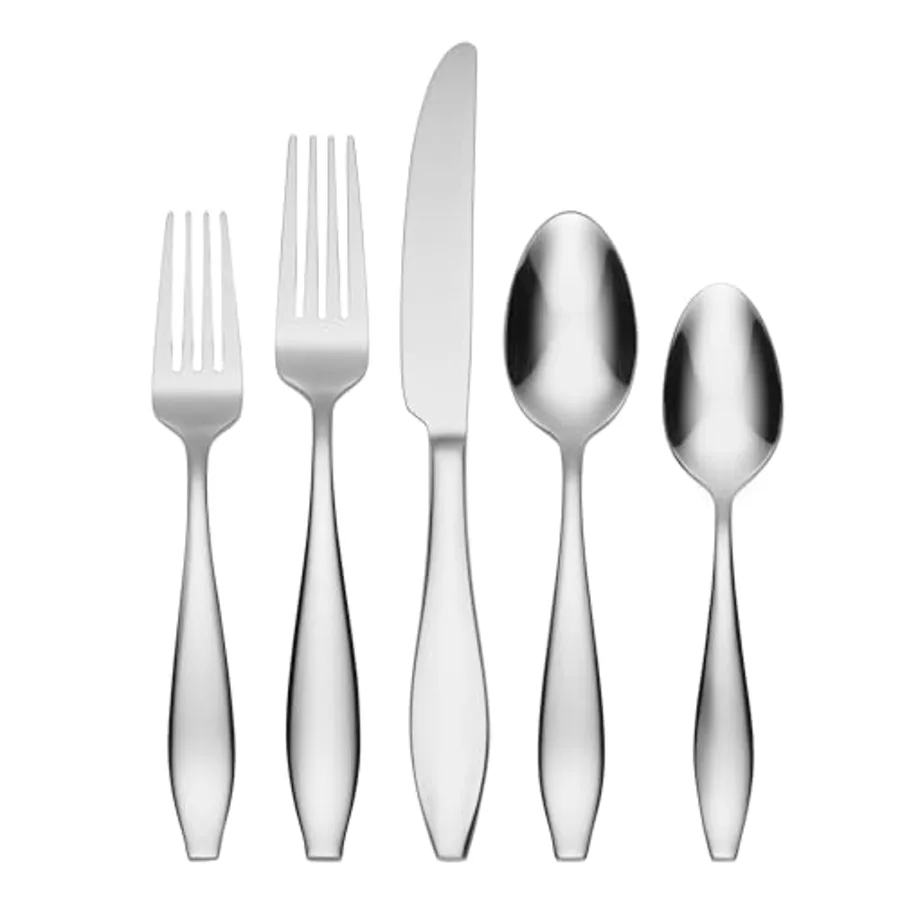
The three alloys side by side
Here is the practical comparison, with the caveats that matter.
| Property | 18/10 | 18/8 | 18/0 |
|---|---|---|---|
| Chromium | ~18% | ~18% | ~18% |
| Nickel | ~10% | ~8% | none |
| Alloy family | Type 304 | Type 304 | Type 430 |
| Magnetic | No | No | Yes |
| Resists pitting | Best | Very good | Adequate |
| Shine | Warm, deep | Warm | Cooler, harder |
| Nickel allergy | Not suitable for the sensitive | Not suitable | Suitable |
| Relative price | $$$ | $$$ | $ |
Note the alloy family row, because it is the one detail that explains everything else. 18/10 and 18/8 are both within the Type 304 family, the workhorse stainless specified for commercial kitchens, brewing tanks and food processing. 18/0 is Type 430, a ferritic stainless that is perfectly food-safe and considerably cheaper, but less forgiving of prolonged contact with salt and acid.
You may also see knife blades described differently from the handles in the same set. That is normal and not a cheat: a blade needs to hold an edge, which calls for a harder, higher-carbon steel that would be a poor choice for a spoon bowl. A good set often pairs an 18/10 handle with a hardened blade.
How to tell them apart at home
If the stamp has worn off, or you have inherited a drawer with no paperwork, there is a two-second test.
Put a magnet on it. 18/0 is ferritic and will hold a fridge magnet firmly. 18/10 and 18/8 are austenitic and will barely respond, though a heavily cold-worked piece can show a faint pull at the very tip of a tine where the metal was stressed during forming. A spoon bowl that grips a magnet is 18/0. A spoon bowl that ignores it is Type 304.
The second test is patience: look at the pieces that live in the dishwasher's cutlery basket pointing up. After a few years, 18/0 in a hard-water house will often show faint speckling before 18/10 in the same basket does.
Silverplate and sterling, briefly
Two older categories still turn up, and both behave differently from stainless.
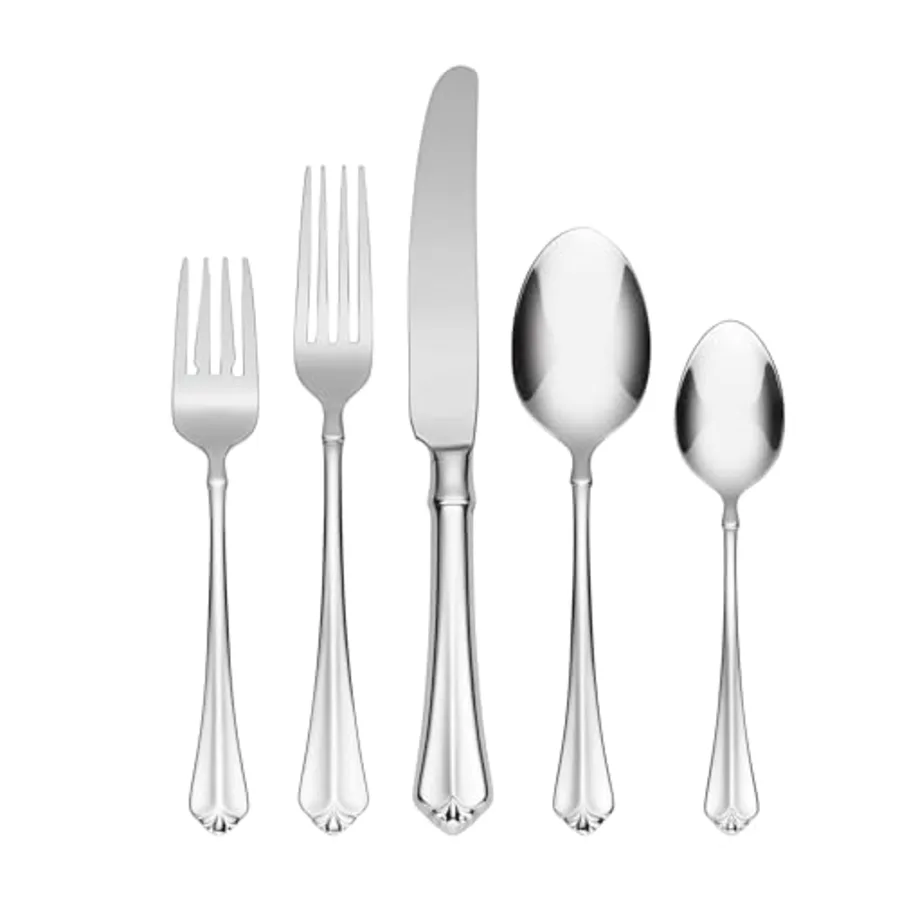
Silverplate is a base metal, historically nickel silver or brass, with a layer of pure silver deposited on it electrically. This is what Community Plate was from 1899 onward, and it is how the company became a household name. That story is told at length in the piece on how a commune ended up making flatware. Plate gives you the actual optical depth of silver, which no stainless quite matches, at a fraction of the cost. The trade is maintenance: silver tarnishes, so plate wants polishing, and the plating layer is finite and will eventually wear through at the high points of a pattern.
Sterling is 92.5 per cent silver throughout, with copper making up the rest for hardness. It tarnishes like plate but can be polished indefinitely because there is no layer to wear through. It is also many times the price of stainless and is now largely a heirloom and wedding-registry category.
If you have inherited plate and want to keep using it, the care and tarnish guide covers what to do, and the longer article on what never to do to plate covers the three habits that strip it for good.
What actually damages flatware
Most flatware that looks bad has not corroded. It has been damaged in one of four boring, avoidable ways.
- Salt and acid sitting on it. A fork left in a salad bowl of dressing, or a spoon in tomato sauce, gives chlorides a long uninterrupted window against the surface. This is the single most common cause of pitting, and it affects 18/0 sooner than 18/10.
- Detergent that is too aggressive. High-alkaline and chlorine-bearing dishwasher products attack the passive layer. If the whole drawer has gone dull at the same rate, suspect the detergent before the steel.
- Contact with dissimilar metals in a wet basket. Stainless resting against aluminium or cast iron in standing water sets up a small galvanic cell. The stainless usually wins, but the marks are real.
- Trapped water. Standing water in a hollow knife handle, or in the bottom of a cutlery basket, keeps oxygen away from the surface and prevents the passive layer from doing its job. Drying and storing pieces loosely does more for longevity than any polish.
None of these are exotic. Rinsing before the dishwasher and emptying the basket promptly will outlast any premium alloy that is treated badly. The dishwasher question is settled at length elsewhere, and the same article separates pitting, which is permanent, from spotting, which is not.
Which alloy to buy for which table
Here is the practical recommendation, which is not always the expensive one.
| Your situation | Buy | Because |
|---|---|---|
| A service meant to last decades, or a wedding registry | 18/10 | The alloy that ages best and matches replacement pieces years later |
| Somebody in the house reacts to nickel | 18/0 | No nickel in the alloy at all |
| Everyday set for a busy family, replaced every few years | 18/0 | The price difference buys more pieces, and losses hurt less |
| A cabin, a rental or a second home | 18/0 | Nothing here justifies the premium |
| Adding to an inherited service | Match what you have | Mixed alloys in one drawer age at different rates and start to look mismatched |
That last row is the one people get wrong. If you own a set from the 1980s and buy a modern 18/0 dozen to extend it, the two will look identical on day one and noticeably different in five years. Matching alloy matters more than matching pattern for how a drawer ages. The replacement guide covers how to identify what you already own before you buy more of it.
A closing note on the numbers
It is worth saying plainly that alloy is not the same as quality. A well-made 18/0 fork with a properly graduated handle and a clean polish is a better object than a badly made 18/10 one with thin stamping and a rough edge. The numbers tell you about corrosion and shine. They tell you nothing about balance, weight distribution, or whether the tines are aligned, and those are the things you notice in the hand. That is the subject of a separate piece on weight and balance, the part of a set you cannot photograph.
So the sensible order is: decide the alloy from the table above, then pick the pattern you actually want to look at for the next twenty years. If you are at that second step, the pattern finder narrows the field, and the complete sets are the fastest route to a drawer that matches. If you have not decided how many places you are buying for, start instead with the count rather than the pattern, then work out what each of those pieces is actually for.