Table setting has a reputation for being fussy, and some of it deserves that. But underneath the etiquette-book diagrams there is a single practical rule that generates almost every other rule, and once you have it, you can set any table without looking anything up.
This piece covers the three settings that cover real life, what each piece is actually for, and the small number of errors that a guest genuinely notices. If you are still deciding how many pieces to buy, the place setting builder does that arithmetic; this article is about arranging what you already own.
The one rule that generates all the others
Work from the outside in, in the order the courses arrive. That is the whole system.
The fork you use first sits furthest from the plate. The fork you use last sits closest. Same for spoons and knives on the right. A guest who knows nothing about etiquette will still get it right if they simply start at the edges and move inward, which is precisely why the convention exists: it is a set of instructions written in cutlery.
Everything else follows. Salad before the main means the salad fork sits outside the dinner fork. Soup first means the soup spoon sits outside everything on the right. Dessert comes last, so its pieces go above the plate or arrive with the course.
The arrangement is not a test of the guest. It is an instruction manual for the meal, laid out in the order it will happen.And that is why it survives
The casual setting: three pieces
This is a weeknight, a takeaway eaten properly, a Tuesday.
- Dinner fork to the left of the plate
- Dinner knife to the right, blade facing the plate
- Teaspoon or soup spoon to the right of the knife
- Napkin under the fork or on the plate
Three pieces per person. If you are buying a set purely for this, count on three per seat plus spares. A 20-piece set gives four people five pieces each, more than a casual household tends to need.
The everyday setting: four or five pieces
This is Sunday lunch, having friends over, most dinners where there is a starter.
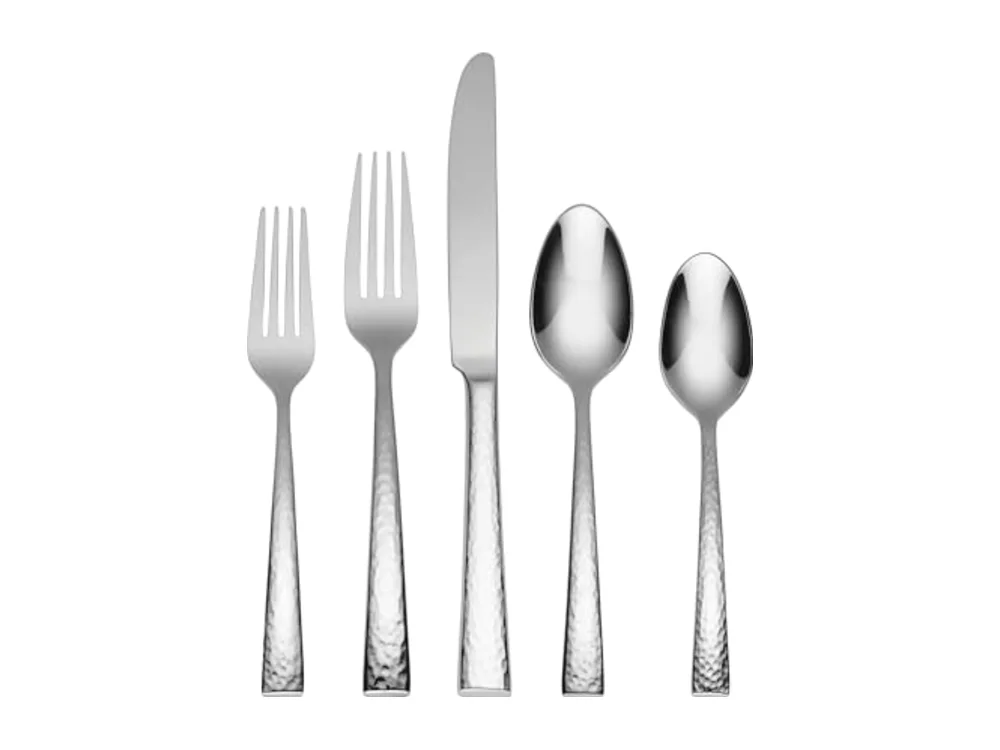
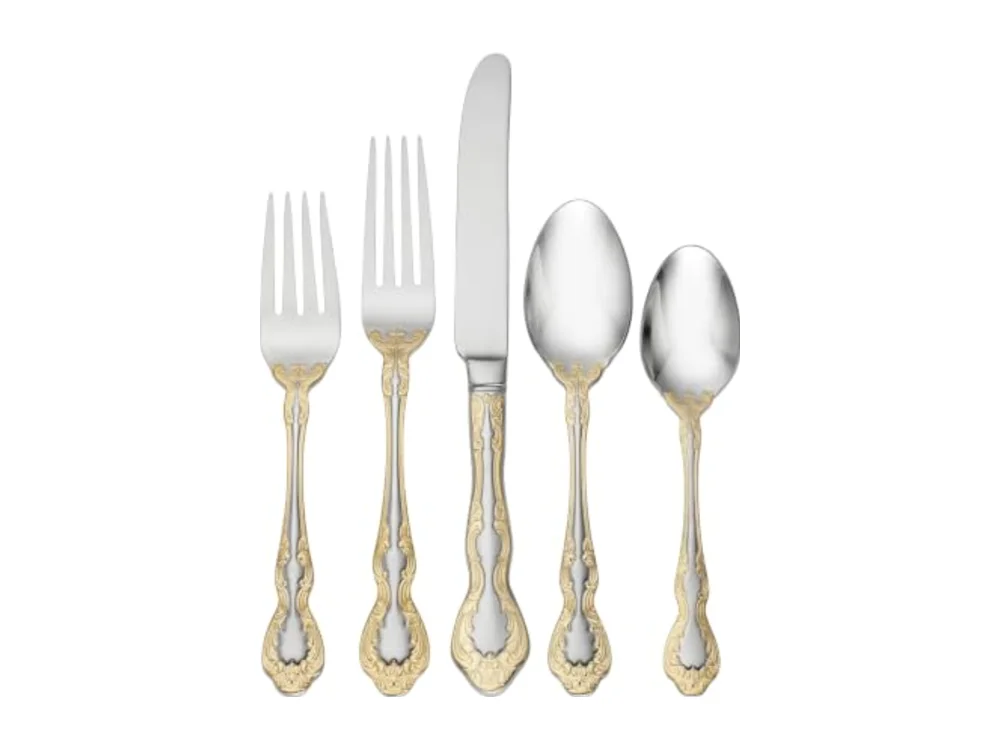
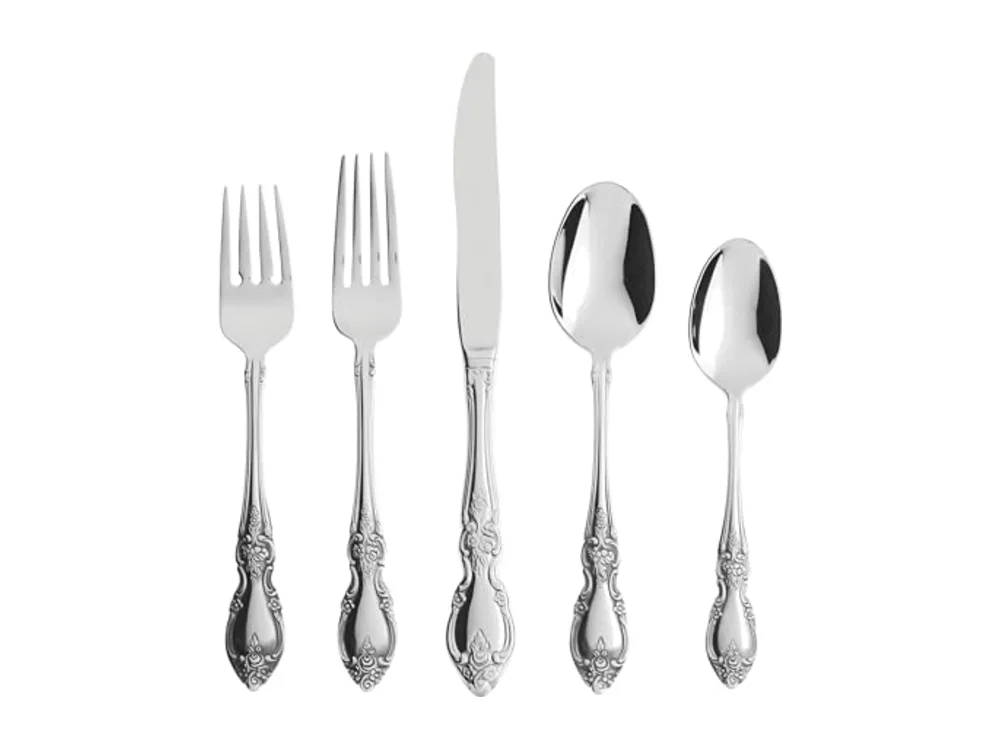
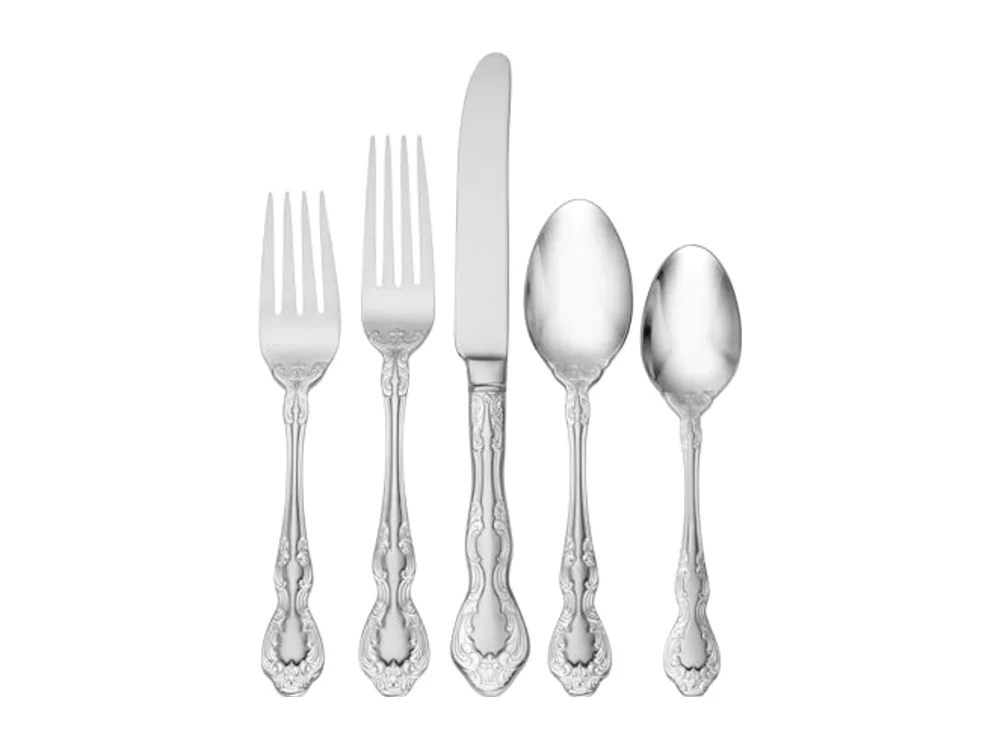
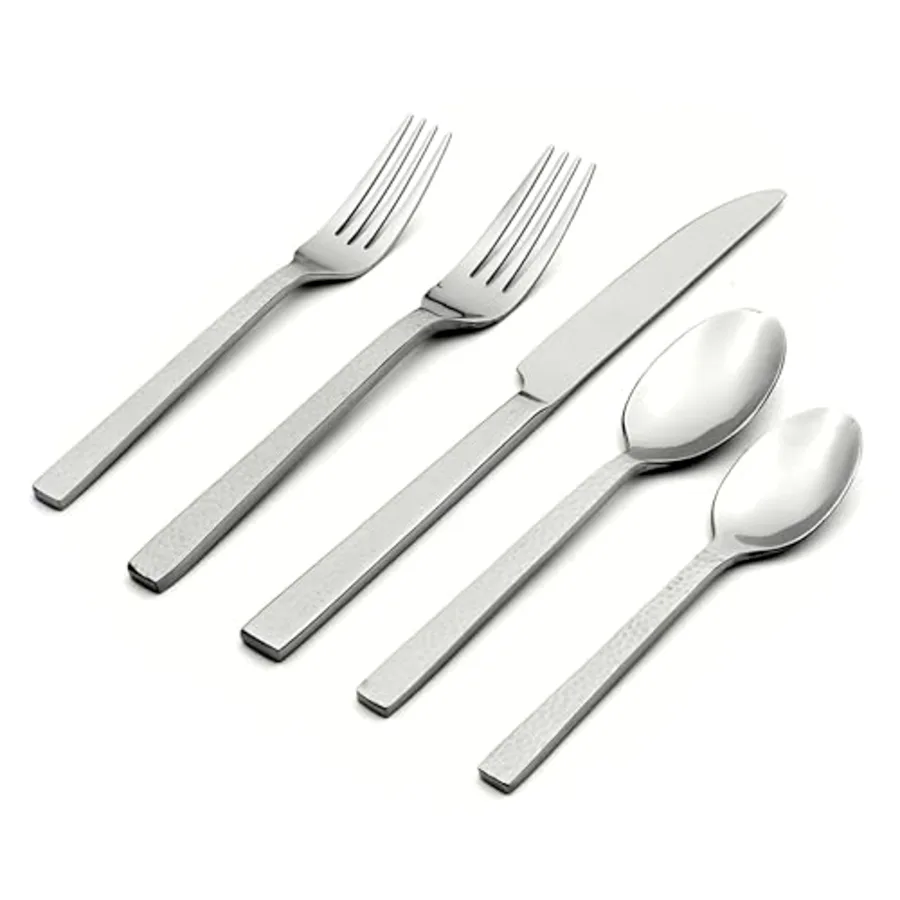
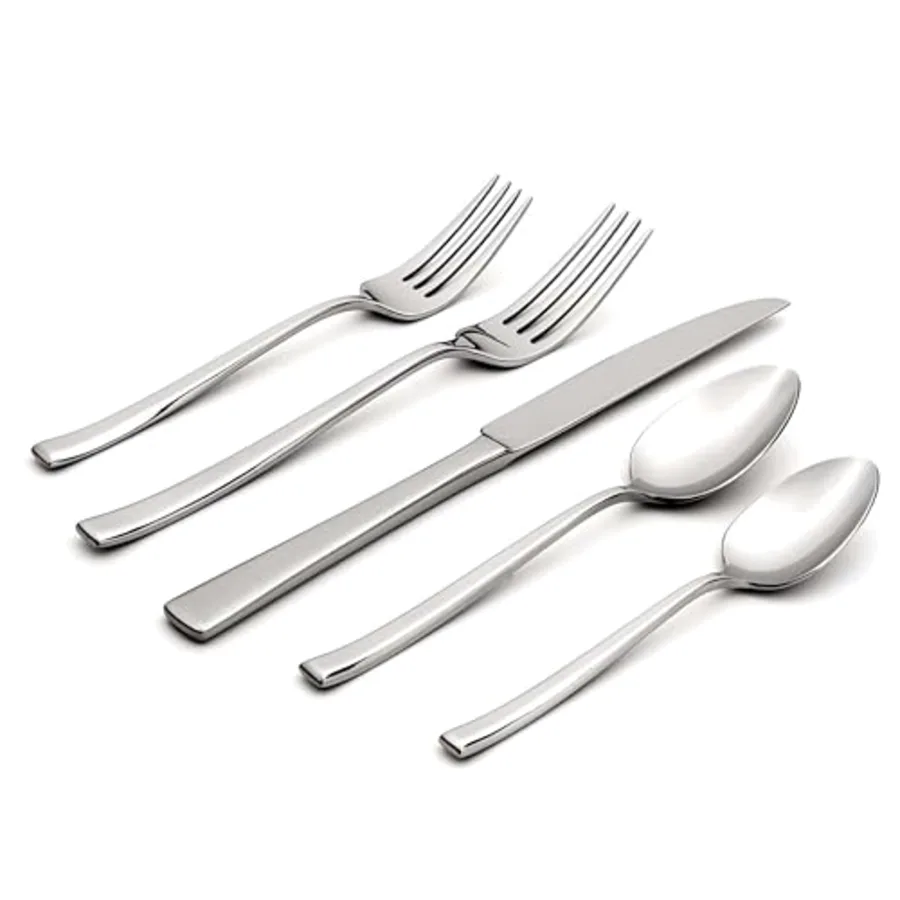
From left to right: salad fork, dinner fork, plate, dinner knife (blade in), teaspoon, soup spoon. That is the five-piece place setting, and it is the unit almost every boxed flatware set is built around. A 20-piece set is four of these. A 45-piece set is eight of them plus five serving pieces. A 65-piece set is twelve settings plus five servers.
Understanding that arithmetic makes the numbers on the box legible:
| Set size | Five-piece settings | Seats | Usually includes |
|---|---|---|---|
| 20-piece | 4 | 4 | Place settings only |
| 45-piece | 8 | 8 | Settings plus about five serving pieces |
| 50-piece | 10 | 10 | Settings only, or 8 plus servers |
| 65-piece | 12 | 12 | Settings plus about five serving pieces |
| 90-piece | 12+ | 12 | Settings, servers and extra teaspoons |
Check the piece breakdown rather than trusting the headline number. Two sets both labelled 45-piece can divide very differently: one may be eight settings plus five servers, another ten settings plus nothing. Our complete sets list the service size on each card for exactly this reason.
The formal setting
Holidays, anniversaries, the meal where the good plates come out. For most American households this is also the meal where inherited silverplate appears, which brings its own rules. Community Plate was the standard wedding present for half a century, so a great many attics still hold a canteen of it.
Left of the plate, outside in: fish fork, dinner fork, salad fork (in the American convention the salad fork often sits closest to the plate when salad is served after the main, and outside it when salad comes first, which is the one genuinely confusing case).
Right of the plate, outside in: soup spoon, fish knife, dinner knife, blade always facing the plate. The blade-in convention is old and slightly grim in origin: an edge turned toward your neighbour reads as a threat.
Above the plate: dessert fork and dessert spoon, laid horizontally, spoon above fork, spoon handle to the right, fork handle to the left.
Bread plate at the upper left with a butter knife laid across it. Glassware upper right.
A useful trick for anyone who blanks at a formal table: b and d. Make a lowercase b with your left hand and a lowercase d with your right. Bread on the left, drinks on the right. It works every time and nobody can see you doing it under the tablecloth.
Glassware, and where it actually goes
Glasses sit above the knives, to the upper right, arranged in the order they will be used, which usually means the water glass closest to the diner and the wine glasses trailing out to the right.
The practical constraint most guides skip: a place setting is about twelve inches wide at a formal table and glasses eat into your neighbour's territory fast. If you are seating twelve at a table sized for ten, drop a glass rather than crowding, and pour from the sideboard.
Our dinnerware and glass section covers the pieces underneath and beside the flatware.
What the pieces are for
A surprising number of people own pieces they have never identified. Here is the short glossary of what turns up in an Oneida service.
| Piece | Length | What it is for |
|---|---|---|
| Dinner fork | ~7 to 7.5 in | The main course. The largest fork in a standard setting. |
| Salad fork | ~6.5 in | Salad and dessert. Often has a wider left tine for cutting. |
| Dinner knife | ~9 in | The main course. Not a steak knife: usually a mild edge. |
| Teaspoon | ~6 in | Coffee, tea, dessert. The piece households lose fastest. |
| Soup spoon | ~7 in | A rounder, deeper bowl than a teaspoon. |
| Iced tea spoon | ~7.5 in | Long handle for tall glasses. A genuinely useful oddity. |
| Butter knife | ~6.5 in | Spreading, on the bread plate. No cutting edge. |
| Serving spoon | ~8.5 in | Passing dishes. Usually sold with the larger sets. |
| Pierced serving spoon | ~8.5 in | Draining as you serve: vegetables, anything in liquid. |
If a set arrives and something in it is unfamiliar, it is almost always the iced tea spoon or the pierced server. Both are worth keeping. This table is also the reason a headline piece count tells you so little on its own. Reading the breakdown rather than the number is what stops a 45-piece box turning out to be short on teaspoons.
The mistakes that show
Guests do not audit your table. But four things register even with people who could not name a single rule.
- Knife blade facing outward. It reads as slightly hostile even to people who do not know why.
- Mismatched metal in one setting. An 18/0 fork beside an 18/10 one is invisible when new and obvious after a few years, because they age at different rates. This is the strongest argument for matching alloy when you extend a service, covered in the alloy guide.
- Water spots. More noticeable than any arrangement error. Hard water plus air drying equals spotting; a quick towel dry solves it permanently.
- Crowding. Twelve settings on a table for eight makes everyone eat with their elbows in. Fewer glasses, or a second table.
When to break the rules
Freely, and often.
The formal setting exists to sequence a multi-course meal served by somebody else. If you are serving family style from the middle of the table, most of the apparatus is theatre. Put out what the meal actually needs, keep the outside-in order, and stop.
The one convention worth keeping even at the most casual table is the sequencing itself. Not because a guest will judge you, but because it means nobody has to ask which fork, and that small absence of friction is the entire point of the exercise.
If you are assembling a service and not sure what to buy, start with the setting builder to get the count, then the pattern finder to narrow the look. The companion article on how to choose a set takes the same decision from the other end, and if the table you are laying is inherited silverplate rather than stainless, the maintenance routine is worth reading before the first dinner rather than after it.
And if you are adding to something you inherited, the replacement guide is the place to start. Bear in mind that matching the alloy matters more than matching the pattern for how a drawer ages.