Flatware is bought perhaps three times in a lifetime and then used three times a day. That ratio makes it one of the highest-leverage small purchases in a house, and also one of the easiest to get wrong, because the things that decide satisfaction are almost invisible in a product photograph.
This is the guide we would give a friend. It goes in the order the decisions actually matter, which is not the order the shops present them.
Start with the count, not the pattern
Nearly everyone starts by browsing patterns. That is the fun part and the wrong first step, because the count determines which patterns are even available to you and how much you will spend.
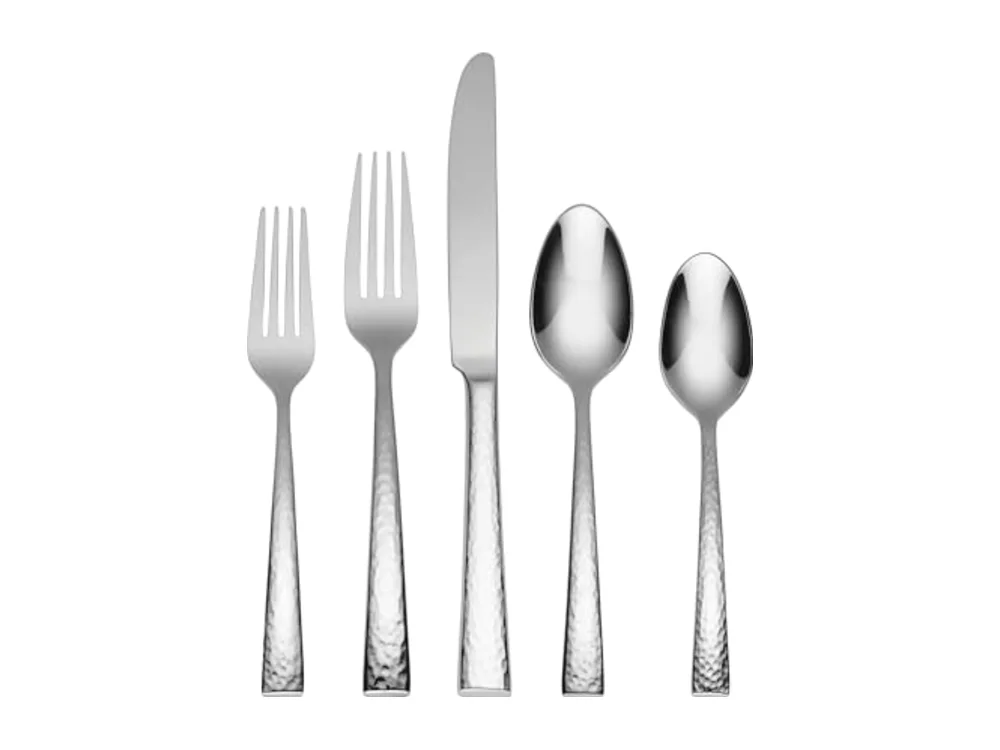
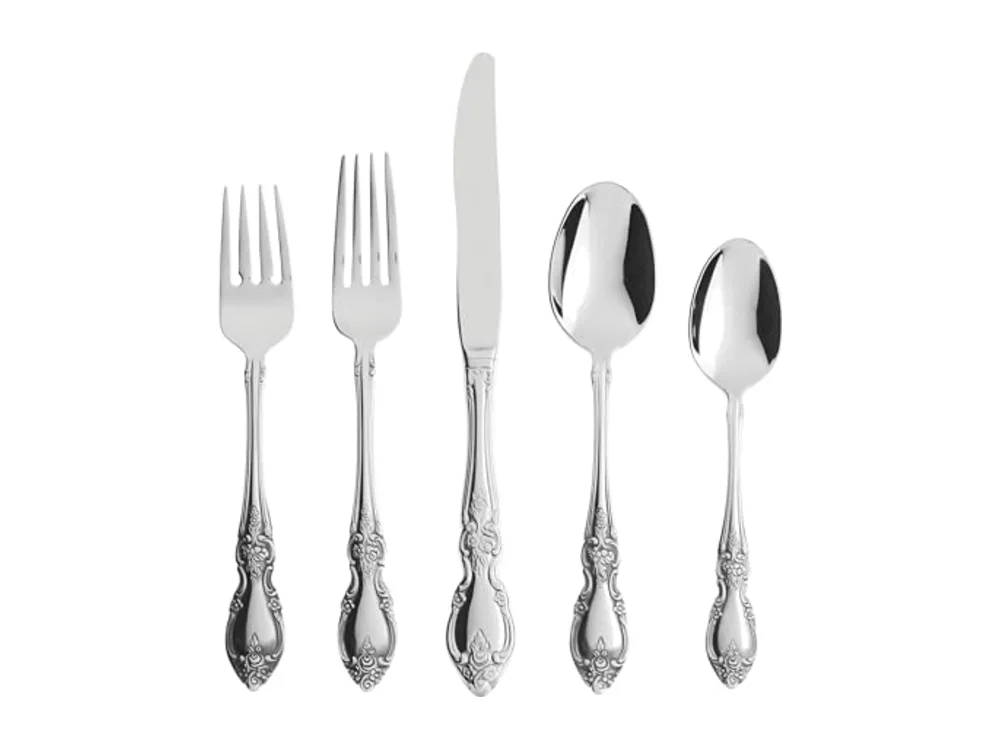
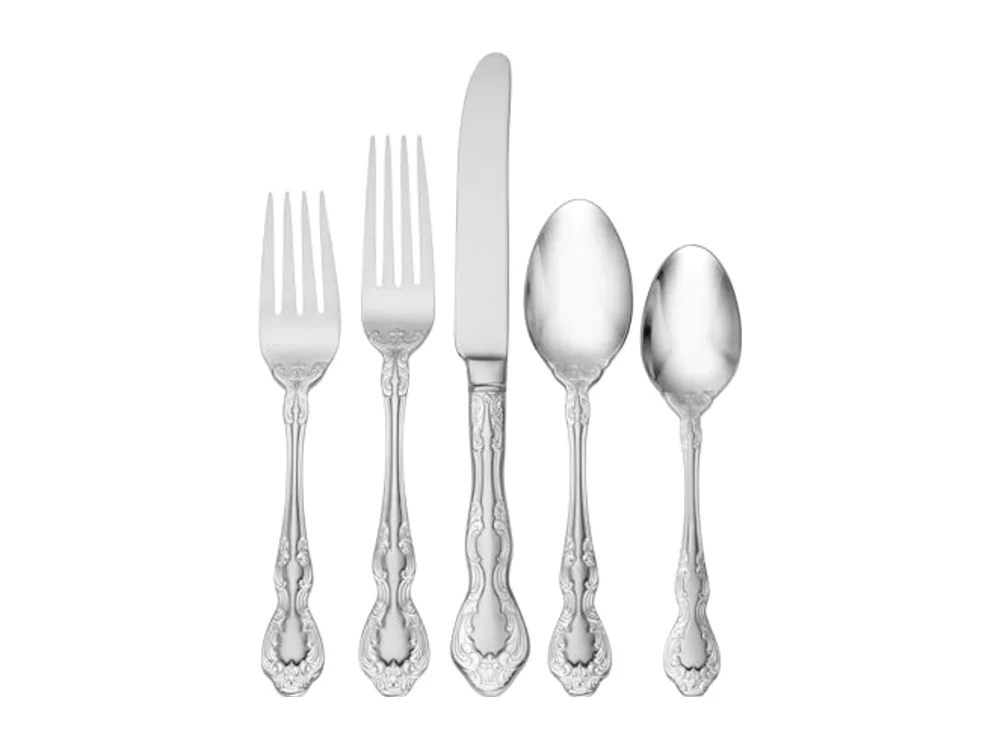
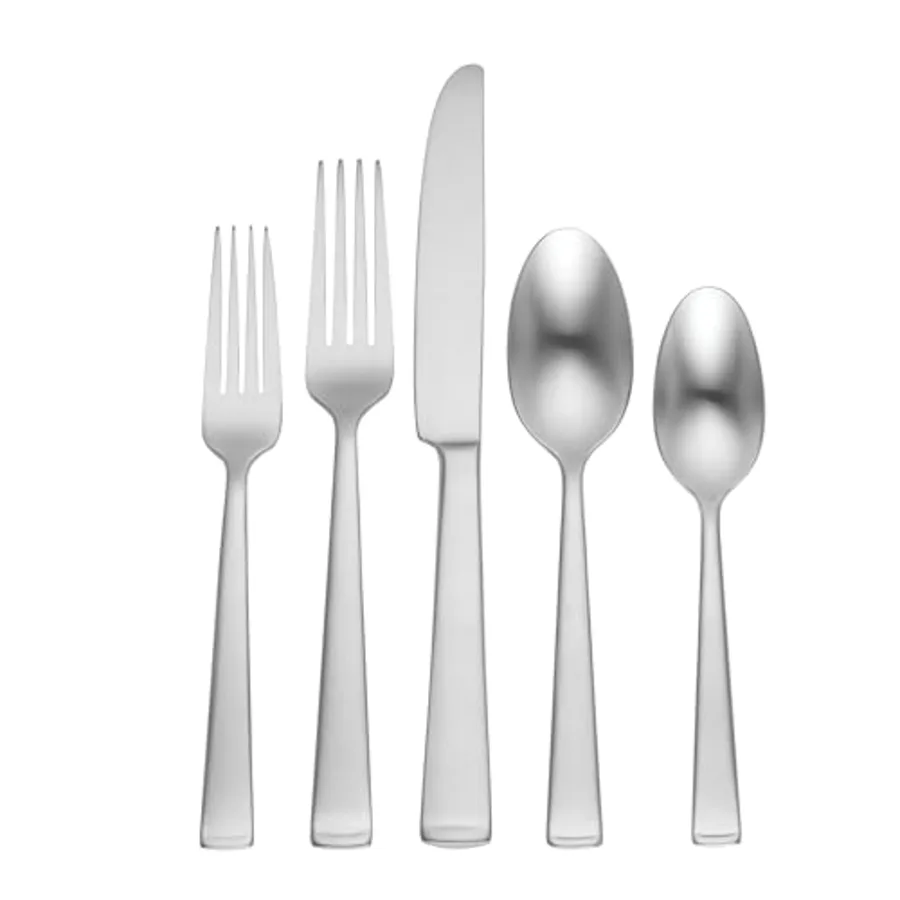
The arithmetic is simple. A standard place setting is five pieces: two forks, a knife and two spoons. Multiply by the number of people who sit down on an ordinary evening, then decide whether you are catering for gatherings as well.
The mistake in both directions is common. Buying for four when you host twelve twice a year means borrowing or mismatching every holiday. Buying for twelve when you are two people means most of the set lives in a box, and you paid for storage.
The honest middle path for most households: buy for your everyday number plus one or two spare settings, and add open stock later if hosting becomes a habit. Our place setting builder does this calculation including dishwasher-cycle spares, which is the variable people forget. If half your forks are in the machine at any moment, a set sized exactly to your seats will run out.
Read the piece breakdown, not the headline
Piece counts are marketing numbers. Two sets both labelled 45-piece can be completely different objects.
| Headline | Common breakdown A | Common breakdown B |
|---|---|---|
| 20-piece | 4 settings of 5 | 5 settings of 4 |
| 45-piece | 8 settings of 5, plus 5 servers | 9 settings of 5, no servers |
| 65-piece | 12 settings of 5, plus 5 servers | 13 settings of 5 |
| 90-piece | 12 settings, servers, extra teaspoons | 18 settings of 5 |
Two things to check before buying. First, does it include serving pieces, because a set without them means buying a serving spoon separately at a price that feels absurd for one item. Second, how many teaspoons, because teaspoons are used at roughly double the rate of anything else and are the first piece any household runs short of.
Every set on this site lists the service size on the card, and the serving section covers the pieces sets leave out.
Weight and balance: the part you cannot photograph
This is the thing that separates flatware you enjoy from flatware you tolerate, and no listing photograph conveys it.
Weight comes from the gauge of steel and how it was rolled. Heavier is not automatically better, but very light flatware feels insubstantial in the hand and its handles are more prone to bending. A dinner fork somewhere around 50 to 70 grams feels solid to most people without being tiring.
Balance is where the weight sits. Pick up a fork by the handle end and let it pivot on your finger: a well-balanced piece sits roughly level rather than nose-diving. This comes from graduated rolling, where the blank is made thicker at the handle and thinner toward the working end. Cheap flatware is rolled to a uniform thickness, which is faster and cheaper and produces a piece that tips forward in the hand.
Edges matter more than anyone expects. Run a thumb along the outside of a spoon bowl and the back of a fork. A properly finished piece feels eased. A poorly finished one has a faint burr you will feel at every meal for a decade.
You will pick this object up four thousand times a year. Weight, balance and edge finish are what you are actually buying.Pattern is what you are looking at
None of this is what the alloy number measures, which is worth saying plainly: a well-made 18/0 fork is a better object than a badly made 18/10 one. The numbers tell you about corrosion and shine and nothing about the hand.
Finish: mirror, satin, black and gold
Finish is more than looks: it changes what shows.
| Finish | Looks like | Shows | Best for |
|---|---|---|---|
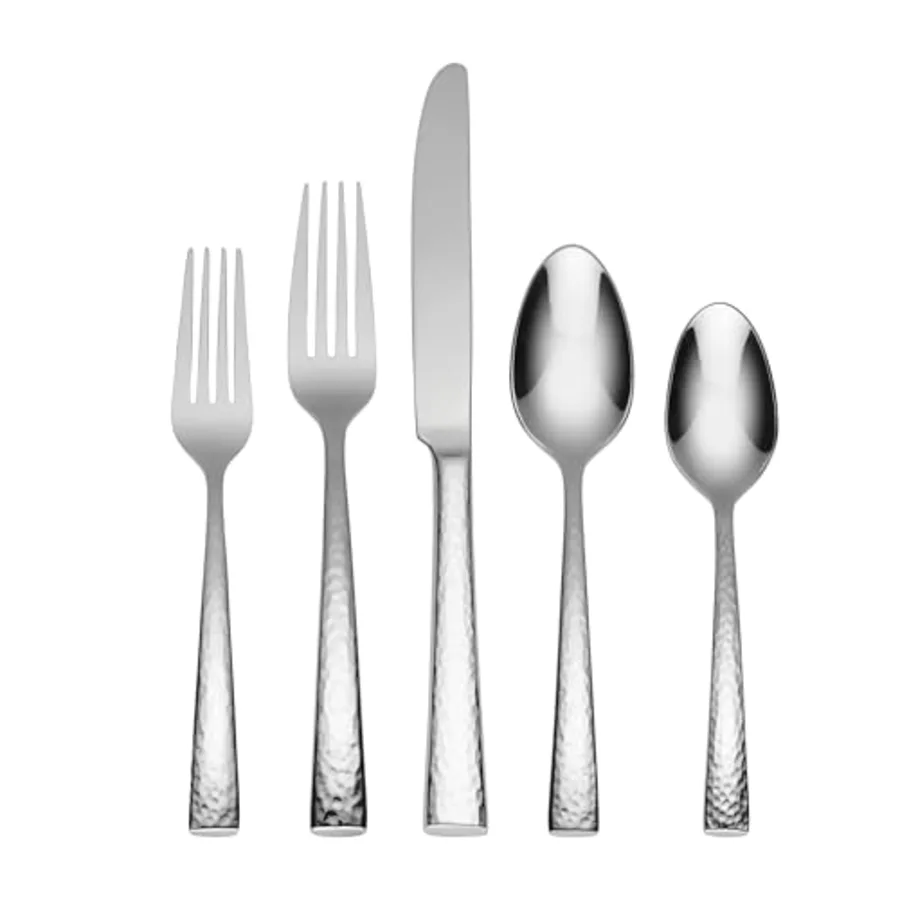
| Mirror | Bright, reflective, formal | Fingerprints and water spots readily | Formal tables, softer water, households that towel dry |
| Satin / brushed | Matte, contemporary, softer | Hides marks well; scratches blend in | Everyday use, hard water, families |
| Mixed mirror and satin | Contrast along the handle | Middle ground | Hiding wear while keeping some shine |
| Black or coloured PVD | Dark, matte, dramatic | Wear at high points over years | Statement tables; check dishwasher rating first |
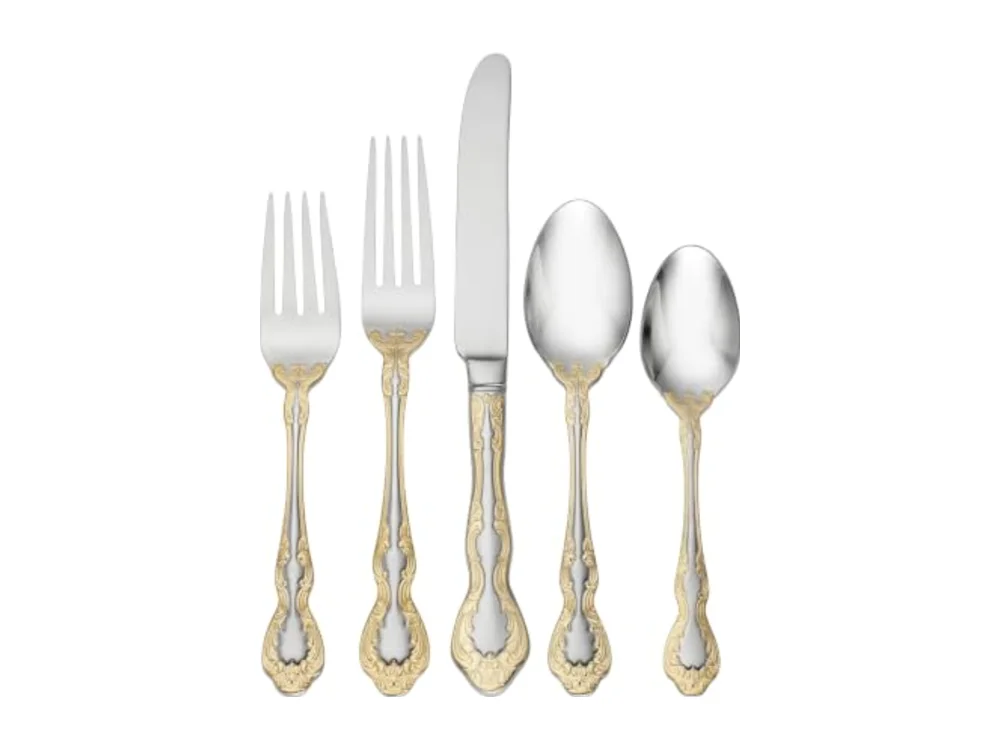
| Gold tone | Warm, plated or PVD accent | Wear at contact points | Occasional use more than daily |
The practical note on coloured and gold finishes: they are surface treatments, and surface treatments wear. Modern PVD coatings are genuinely durable, but the tip of a fork tine and the edge of a spoon bowl take contact every meal. If a black set is going into daily family service, check that the listing states dishwasher safe, and expect some softening at the contact points over years.
The open stock question
Here is the question almost nobody asks in the shop and everybody asks three years later: if I lose a fork, can I buy one fork?
For a great many brands the answer is no. You bought a boxed set, and when a piece goes down the waste disposal or leaves in a takeaway container, your options are an incomplete service or an entirely new set.
This is the strongest practical argument for buying into a pattern with genuine open stock behind it. It is also the reason inherited Oneida services stay in use for decades: the pieces have historically been buyable individually and by the dozen. Our open stock section is exactly that, and the replacement guide covers identifying a pattern you already own.
If a pattern you love has no open stock, buy one extra setting at the start. It is much cheaper than the regret.
Registry buying and inherited sets
Two special cases worth separate advice.
Registry. Buy 18/10, buy the larger service, and pick a pattern that has been in production for a while rather than a seasonal one. A registry set is bought once and expected to last, and production longevity is what makes replacement possible later.
Inherited. The instinct is to buy modern pieces to fill gaps. Resist it slightly. Match the alloy first and the pattern second, because mixed alloys age at visibly different rates and a drawer that looked consistent on day one will not in five years. If the inherited set is silverplate, do not extend it with stainless; keep the plate for occasions and buy a separate everyday service. Plate also wants a different routine from stainless, so the three things that strip plating for good are worth reading first, and the history of Community Plate explains why so many American households have a canteen of it in the first place.
What a higher price actually buys
Being straight about this, because a lot of price difference in this category is pattern licensing rather than metal.
A higher price genuinely buys: the nickel-bearing alloy, heavier gauge steel, graduated rolling for balance, more polishing passes for a cleaner finish, and tighter tolerances so tines line up. Those are all real and all felt daily.
A higher price does not necessarily buy: a longer life for a coloured coating, better dishwasher tolerance, or a pattern that will still be in production in twenty years. Those depend on the specific piece, not the price band.
The sweet spot for most households is a mid-priced 18/10 set with a satin or mixed finish from a pattern with open stock. That combination survives real family use and can be extended.
A short checklist
- Count your everyday seats, add spares for the dishwasher, then size the set.
- Read the breakdown: settings, servers, and how many teaspoons.
- Choose the alloy: 18/10 to keep for decades, 18/0 for price or nickel sensitivity.
- Match the finish to your water and your patience for towel drying.
- Check open stock exists before you commit to a pattern.
- Match what you own if you are extending rather than replacing.
Work down that list and the pattern choice at the end is purely a matter of taste, which is how it should be. The pattern finder is there for that last step, and the alloy guide covers step three in full. Once the box arrives, the glossary of what each piece is for will explain the two or three items nobody recognises, and the care article settles the dishwasher question before the first wash rather than after it.